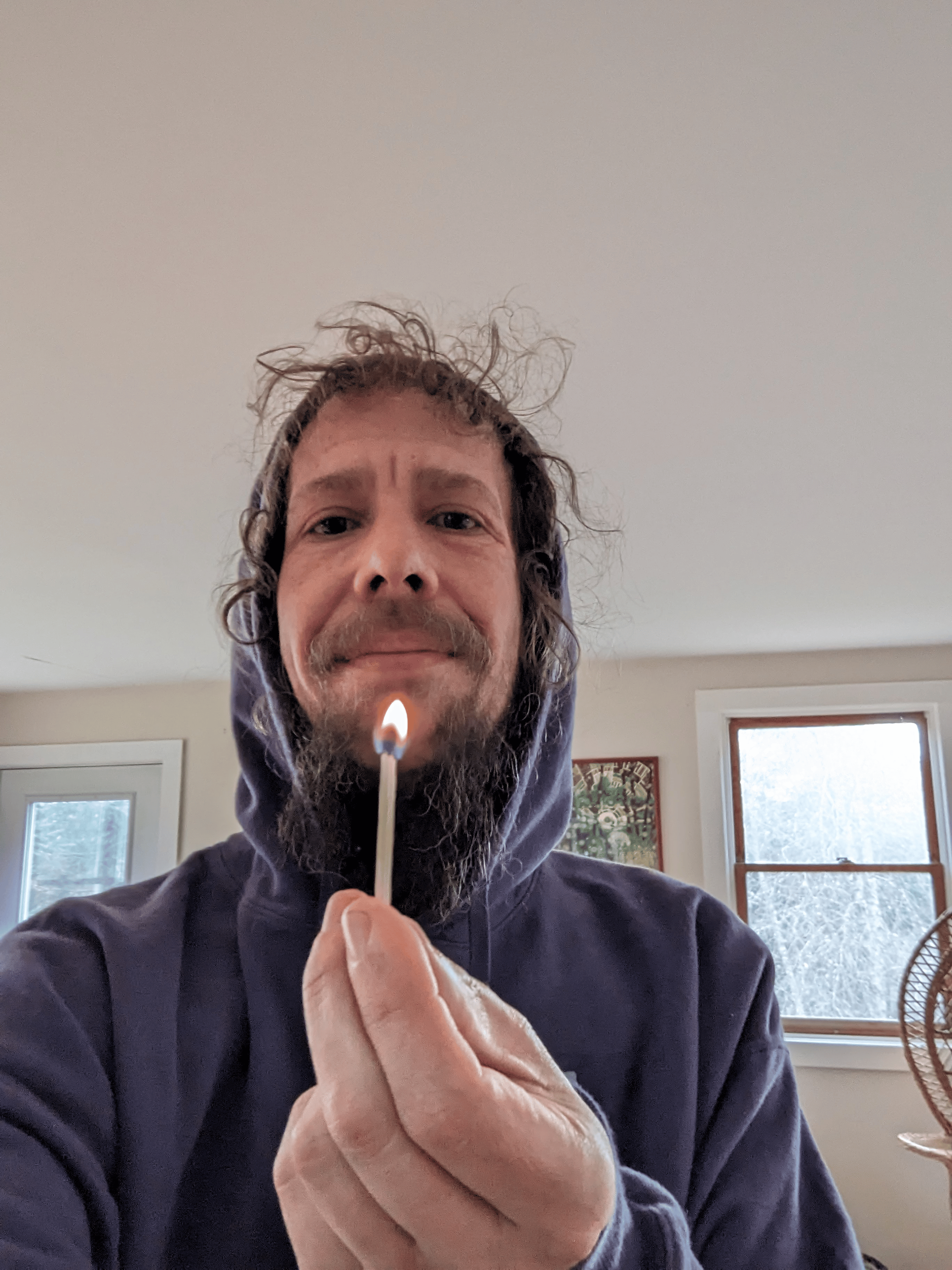
Peter Hile
YTT200 · Yoga Nidra 60h Certified
YTT200 · Yoga Nidra 60h Certified
In 2017, I got sober for the first time in my adult life. I don't say that casually. I say it because it's the truest thing I can tell you about how I came to this practice. Sobriety handed me back a life I had been living at arm's length, and with it came everything I had been avoiding — the anxiety, the restlessness, the feelings that don't have clean edges. I needed somewhere to put all of that. Yoga became that place.
For a while it was enough just to move. To breathe. To be in a body that was learning how to be present without chemical assistance. My practice grew, then shrank during the pandemic the way most things did. But when the world opened back up, I found Samadhi Yoga Sangha in Denver, and that's where things got serious. Consistent practice, consistent teachers, consistent space. I showed up regularly and the practice started showing me things I couldn't have accessed any other way.
And then one evening I walked into what I thought was a movement class.
It wasn't. It was yoga nidra. I had no idea what that meant. I was expecting asana — something physical, something I could work at — and instead I was being asked to lie down and be still. I was honestly annoyed. I didn't sign up to meditate. I signed up to move. But something happened in that room, in that stillness I hadn't asked for, that I couldn't shake afterward. The practice had found the part of me that needed it most — the part that had spent years running from exactly that kind of quiet.
That single class started something in me that hasn't stopped. A reckoning with how I relate to stillness, to restoration, to the permission to stop. It reframed everything I thought I knew about what my body needed and what I had been denying it.
The teacher was Jeremy Wolf — a deeply storied teacher and student of nidra who has sat with many great teachers and carries a deep love of sharing this practice. I'm honored to have him as my teacher. I have practiced with him virtually now for years, following wherever he hosts online offerings, and when the opportunity came to complete a 60-hour Yoga Nidra certification under his guidance, I had been waiting years for the timing to align.
I'm likewise deeply inspired by the work of Uma Dinsmore-Tuli, whose writing and teaching have expanded how I understand nidra's roots — not as a modern wellness technique but as a practice with ancient, cross-cultural origins in threshold states, rest, and the body's inherent wisdom. Her framing of rest as a radical act, and her insistence on recovering nidra from the institutional frameworks that have narrowed it, resonates with everything I'm building toward.
Finishing my certification means a great deal to me. It also means very little in the way of being done. The deeper I go with nidra, the more I see how far it reaches — how many ways there are to embody and share this practice. That's the part that excites me most.
My 200-hour teacher training came through Portland Yoga Project, and it fundamentally shaped how I think about what yoga is for and who it belongs to. Portland Yoga Project centers accessibility, yoga-for-all, yoga-for-life — the understanding that this practice is not the property of any one body type or income bracket or level of flexibility, and that honoring the lineage means honoring its universality. That training reframed everything. It changed how I hold space, who I hold it for, and what I believe a teacher's responsibility actually is.
My days don't look the way you might expect. I'm a project manager for a SaaS application, working with two unique real estate developers — spreadsheets, timelines, stakeholder calls, the kind of structured, high-velocity work that lives entirely in the mind. I spend my professional hours managing complexity, solving problems, keeping systems running. And then I lie down on the ground and ask people to let go of all of it. That's not a contradiction. It's the point. I know what it feels like to carry a full day in your nervous system. I know what it costs. And I know what it feels like when the body finally gets the rest it's been asking for underneath all that motion. The practice I share comes from living in both of those worlds every single day.
I live in Downeast Maine now with my partner, Liz, whose own path in yoga — rooted in movement, embodiment, and wild creative expression — has become inseparable from mine. Our partnership is unified by the way our practices meet and expand each other, deepening how we understand ourselves and our relationship to this world. I am blessed to have been able to collaborate with her work, Wild Embodiment, co-facilitating ecstatic dance and nidra experiences that bring the body into full expression, and, then, stillness. Another explorative dance in dichotemy.
I also co-facilitate Sonic Yoga Nidra with Sen Wilde through Acadia Rising, offered every third Saturday of the month — a practice that weaves live sound into the nidra journey and continues to teach me how much this work can hold.
Stillness Unbound is what all of this has been building toward. A practice rooted in this community, in these landscapes, in the belief that rest is not something you earn but something you already deserve. I'm not building this from a place of having arrived anywhere. I'm building it from a deep and ongoing relationship with rest, with the body, with the ground we share, and with the people who show up to practice on it.
I look forward to practicing with you.
"I know what it feels like to carry a full day in your nervous system. I know what it costs."